
The Art of Discovery: A Dialogue with Douglas Witmer
I first discovered Douglas Witmer’s work on Instagram. There was something immediately familiar about it. In many ways, his work felt like my own, but there was an ease to it that my work didn’t have at the time.
It almost seemed as though his paintings had been created with little thought or effort. Of course, what appears effortless rarely is.
Over the years, Douglas and I have continued to follow one another’s work and encourage each other as artists. What began through a digital platform developed into a real friendship and an ongoing exchange about abstraction and the lives we build around it.
Similar Ideas, Different Visual Languages
There are clear connections between our work. We both place a strong emphasis on color and create paintings that can produce an immediate sense of serenity.
But I’m just as interested in where our approaches differ. Douglas describes our shared interest in repetition as one example. In my work, repetition often happens directly within an individual piece. For Douglas, it tends to emerge across his larger body of work through recurring approaches and motifs.
Our treatment of edges is different, too. My harder edges create what Douglas calls a “sharp kind of energy,” while the edges in his paintings tend to be softer.
That softness is part of what originally attracted me to his work. I admire his use of color and the way he divides space across a surface, not to mention the almost invisible drips and smudges that seem to float just below it.
What Makes a Painting Feel Complete
Despite those differences, neither of us is interested in controlling every part of the outcome. For me, “truth” in art comes down to purity of thought and intention within each individual work. Did the piece come from meaning or thought? Did it begin with a simple plan? Or did it become something spontaneous and free of all the above?
Douglas approaches uncertainty in his own way. He says he never has an end in mind when he begins a painting. His process is almost entirely additive, which means he must deal with both the decisions he makes and the things that happen along the way.
As he puts it, he stops when the painting feels like it has “enough.” I think there’s something very honest about that.
Leaving Discovery to the Viewer
Where I feel the strongest connection between our practices is in what happens once the work leaves our hands.
I love showing something that isn’t immediately obvious. Rather than telling someone what to see, I want them to discover the subtleties of a piece for themselves.
Douglas describes his paintings as “visual situations.” He creates them as places that invite people into their own sensory experience, activating thoughts and feelings without telling them what that experience should be.
We may arrive there through different visual languages, but the invitation is similar. I hope someone looking at our work side by side can recognize the connections while also discovering the subtle differences that make our approaches unique.
Abstraction doesn’t need to provide all the answers. Sometimes the most meaningful part is discovering something for yourself.
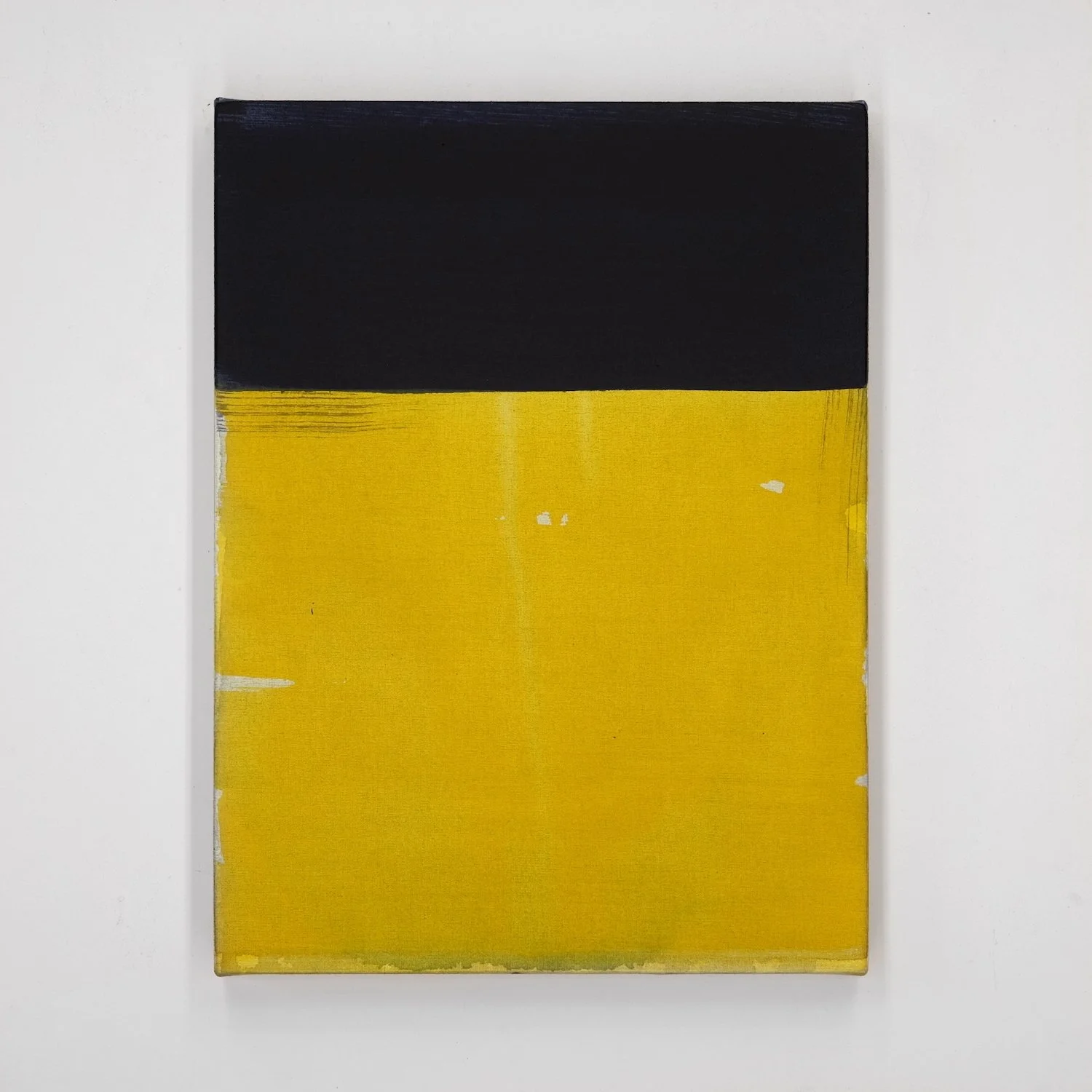
Untitled by Douglas Witmer
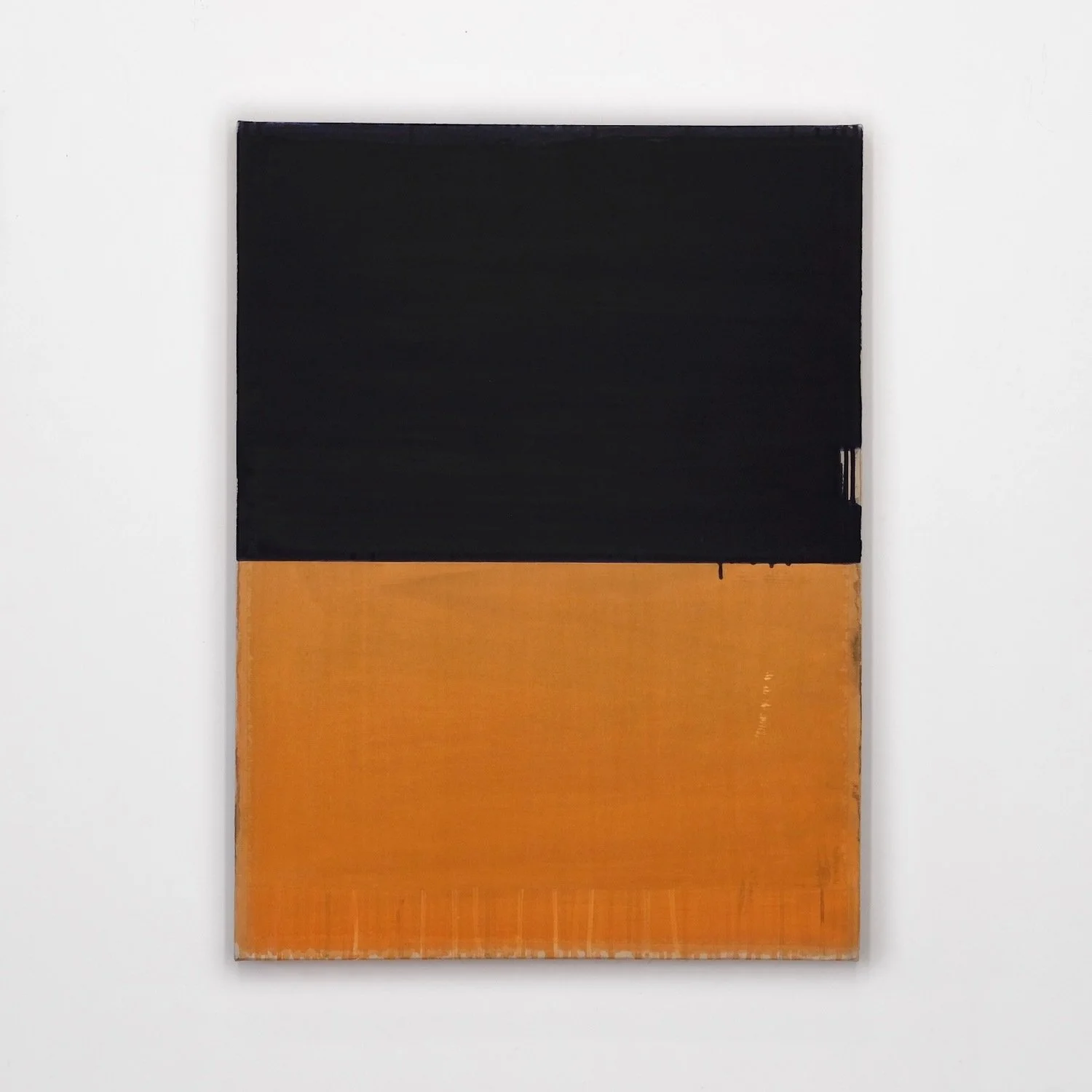
Blazing by Douglas Witmer
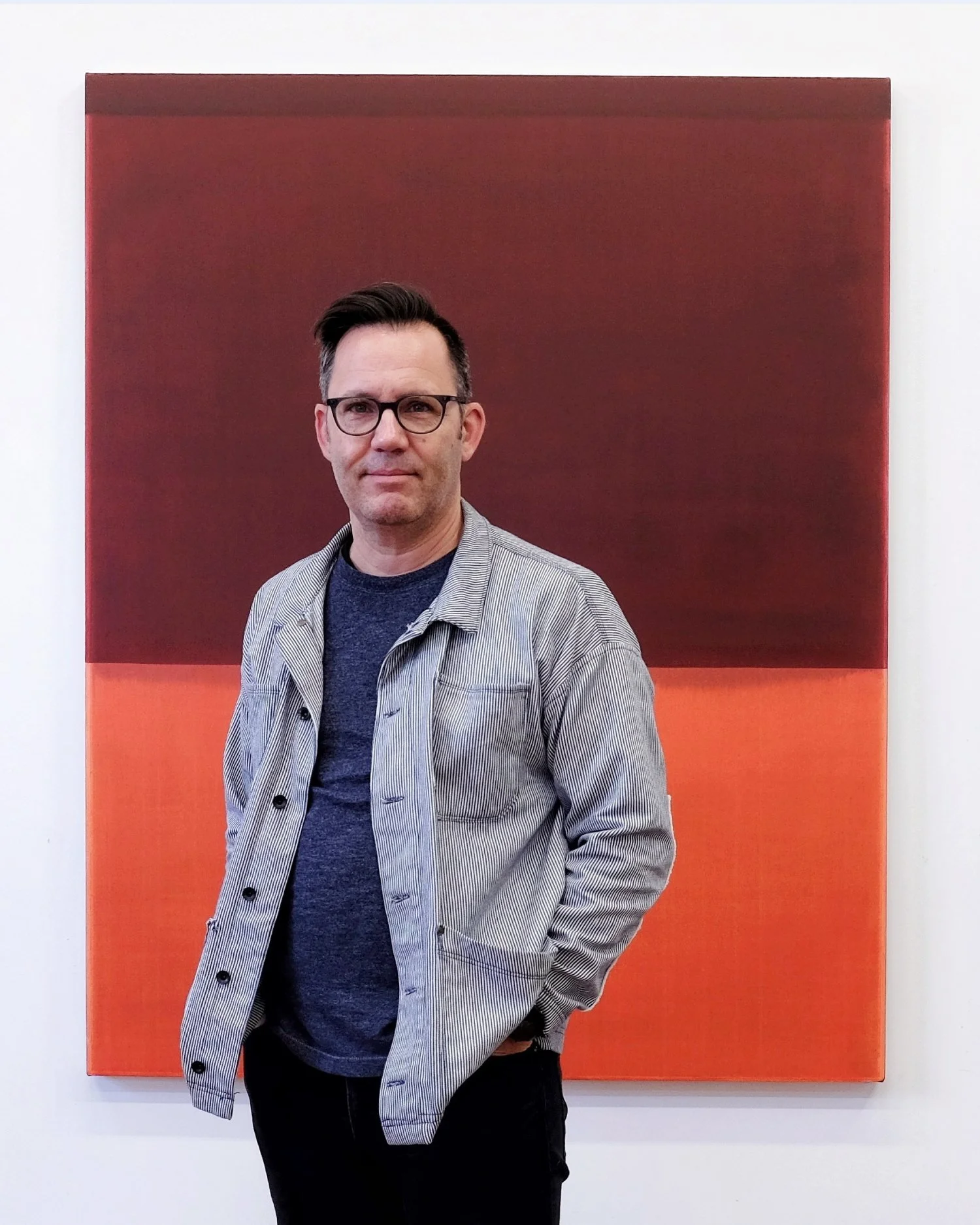
Douglas Witmer